
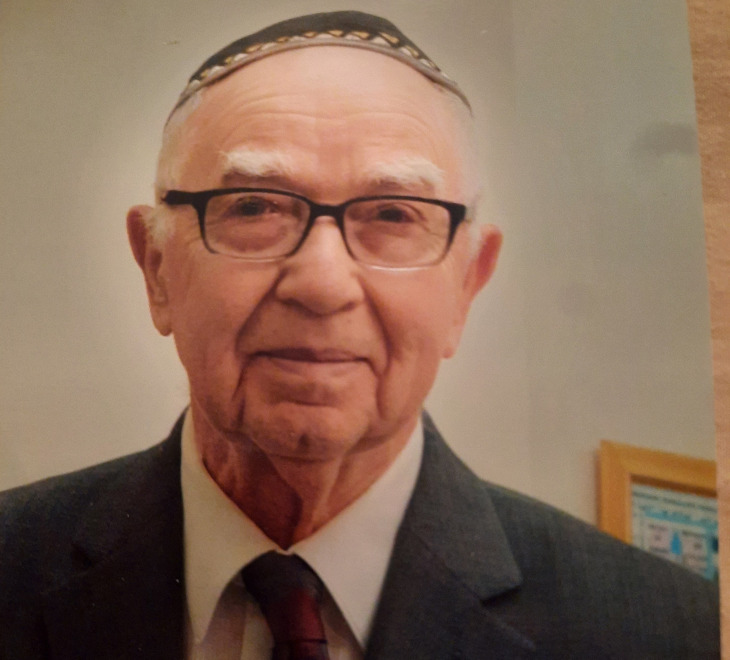
Everyone loved Reb Moshe Shenberger, a quiet, elderly man with kind, wise eyes and a warm, vibrant smile that lit up the synagogue. Children ran to him for candies, unaware of the number tattooed on his arm: A-7433. That number, silently etched into his skin, held the story of an unimaginable past—one of survival, faith, and a bond with his brother Ellie that defied death itself.
Born Morris Shenberger in 1924, on the eve of Passover, he grew up in Sychi, a small shtetl in Subcarpathian Czechoslovakia. The Shenberger family—devout, hardworking farmers—had nine children. Morris was especially close with his younger brother Ellie, born two years after him. Their lives revolved around faith, family, and tradition.
In 1939, their mother passed away from kidney failure and children were left with more responsibilities. Soon after more troubles came their way, the region was occupied by Hungary, then an ally of Nazi Germany. Jewish life became increasingly restricted. Jews had to register with the police and were required to carry special permits. Morris remembered local police entering Jewish homes and publicly beating his father, cutting off his beard in front of the family. “The shock of that incident,” he later said, “stayed with me for the rest of my life.”
In 1942, Hungarian soldiers confiscated their livestock. With their horse gone, Morris and Ellie hauled firewood by hand at 2 a.m. to earn food for the family. Later, when Jews were forced to wear yellow stars, Morris stood in line at the store only to be yelled at: “Get out of the line, Jew!” Often, he returned home empty-handed.
In 1944, the Hungarian Nazis gave the family 30 minutes to pack. They were deported to the Uzhgorod ghetto—an open yard with no shelter, no roof, and no protection from snow, wind, or rain. Their father had managed to bring a kerosene stove and a water bucket—items that saved their lives. They stayed in that square for three weeks.
Then the Nazis announced a transfer to a “better place” and ordered them to leave everything behind. The destination was Auschwitz-Birkenau.
Morris recalled the horror: children crying, people crammed into cattle cars, and the suffocating ride into the unknown. When they arrived, he was immediately separated from his family. “I asked a prisoner where they were,” he remembered. “He pointed to the smoke coming from a chimney and said, ‘That’s your family.’ I cried all night until I heard loud banging—a signal to line up.”
Tattooed Together
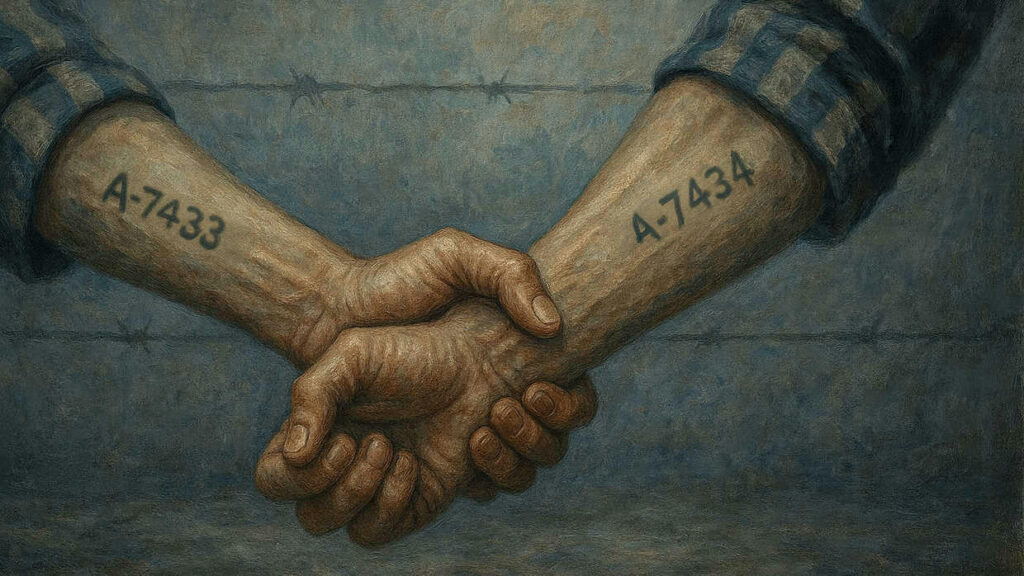
In a moment of miracle, Morris spotted his brother Ellie in another group. Taking advantage of the distraction, the boys managed to switch places with other prisoners and were reunited. They were tattooed together—A-7433 and A-7434—and remained side by side through every torment that followed.
They found strength in each other. At night, lying on wooden planks, they counted blessings: an extra crust of bread, a glimpse of sun, a few berries on the roadside. They reminded each other to keep going.
Death March
In January 1945, as Soviet forces advanced, the brothers endured a brutal Death March to Buchenwald. Morris remembers, “All night we walked on foot, then all day, and another night without stopping, and another day. On the third night, we approached a railway station in Buchenwald. My leg was wounded, and I could barely step on it. I survived because I was leaning on Ellie, who himself was barely standing on his feet from exhaustion. Through the entire journey, Ellie held our bread and put pieces of it in my mouth to give me strength.”
Loaded into open rail wagons filled with snow, they knew they wouldn’t survive sitting still.
“Ellie whispered to me that he could no longer feel his legs. I felt the same. Together we devised a plan. We carefully shifted to move even closer and began massaging each other’s legs, keeping circulation going. We did that for 12 hours straight while the train was moving. That’s what saved us both. My brother and I—we looked out for each other.”
Forty-five people in their wagon froze to death.
After surviving Buchenwald and a month in the underground tunnels of Ohrdruf, they were transported to Theresienstadt. On the seventh day, the train stopped. They feared more Nazis—but it was the International Red Cross. Morris collapsed, unconscious from typhus. Ellie refused to leave him, sitting by his hospital bed, crying:
“Please don’t give up now—after all we’ve been through. Please fight for your life.”
Separated for 31 Years
But Ellie was sent to England. For the first time since they vowed never to be separated, Morris had to stay behind to recover. Their parting—meant to be temporary—lasted 31 years.
Morris eventually regained strength and returned to Uzhhorod, Ukraine. There, he learned that five of his siblings had survived. He never saw his father again.
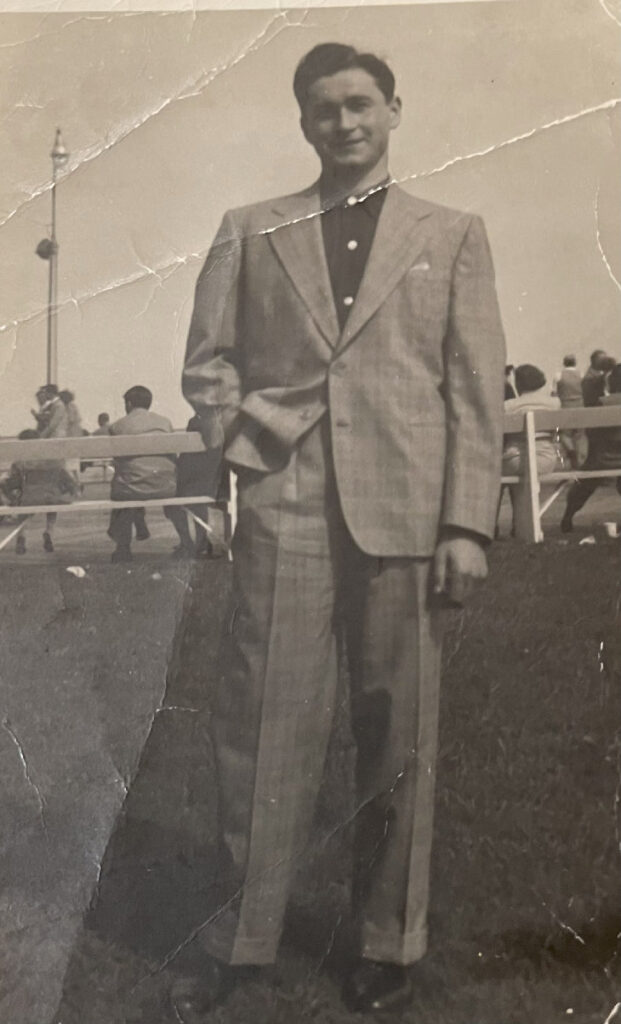
Despite enduring unspeakable horrors, Morris remained gentle. He cherished simple things: nature, a soft bed, warm clothes, Jewish holidays, family gatherings, and quiet gratitude. He never lost his faith in G-d. He never became bitter.
Ellie, believing they’d soon be reunited, sent packages and letters. But Morris remained behind the Iron Curtain. Only in 1976, when Morris immigrated to the United States with his family, did the brothers finally embrace again.
When they finally held each other, there were no words to describe the depth of their emotions.
Both brothers built beautiful families.
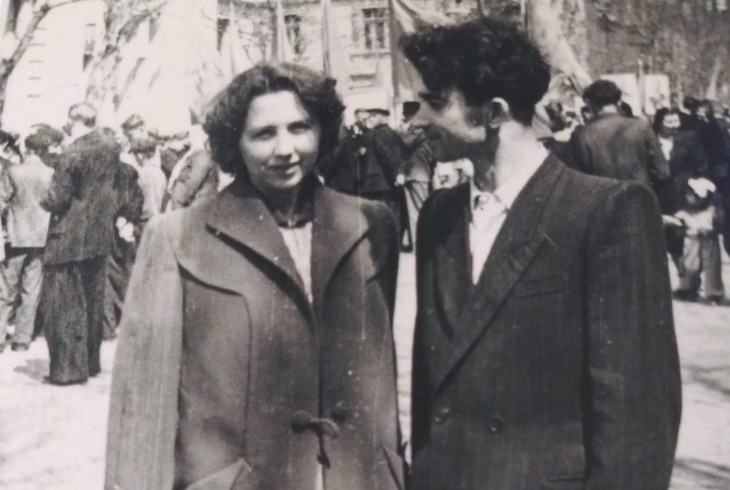
Morris became a tailor. He married Eve and had two daughters, four grandchildren, and four great-grandchildren. He passed away in 2015.
Ellie became a restaurant owner. He married Francis, had two daughters, and passed away in 1986, leaving behind grandchildren and great-grandchildren.
Their love, loyalty, and shared resilience helped them survive the unimaginable. Through it all, they kept each other alive.
Their story reminds us of a timeless truth: We are our brother’s keepers.
_____________________________________________________________________________
May the memories of Moshe ben Avraham and Ellie ben Avraham, and all those who perished in the Holocaust, be a blessing.