
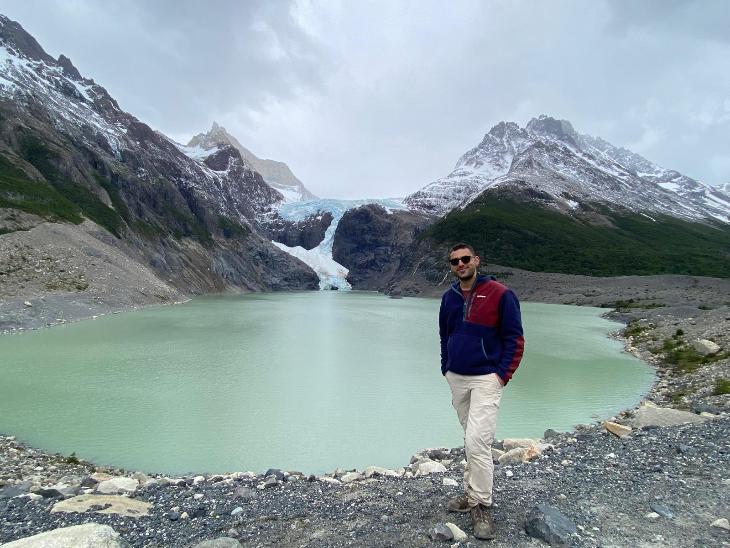
David was raised in Philadelphia in a traditional Jewish home, the son of immigrants from the former Soviet Union and part of a four-generation lineage of physicians. From an early age, he absorbed Judaism’s unwavering principle: preserving human life overrides nearly every other obligation. That value—pikuach nefesh—would guide every decision he made that day, long before the storm revealed its full fury.
“I awoke at 6 a.m. on November 17 to the now-familiar sound of howling gusts,” David later recalled. “It was wet and windy, but nothing that seemed impossible. A local had warned me that the only predictable thing about the weather here is that it’s unpredictable. The park guides gave us the green light and I believed this was just part of Patagonia.”
David packed his gear and began the climb.
The trail rose steeply through dense forest, winding upward in tight switchbacks. Then, just below the tree line, a violent gust cracked a tree trunk like a matchstick. It crashed to the ground only a few feet in front of him.
David paused—but did not turn back. He continued upward rather than descending through the forest, believing the risk of falling trees below was greater than the exposure above. Other hikers on the trail made similar decisions.
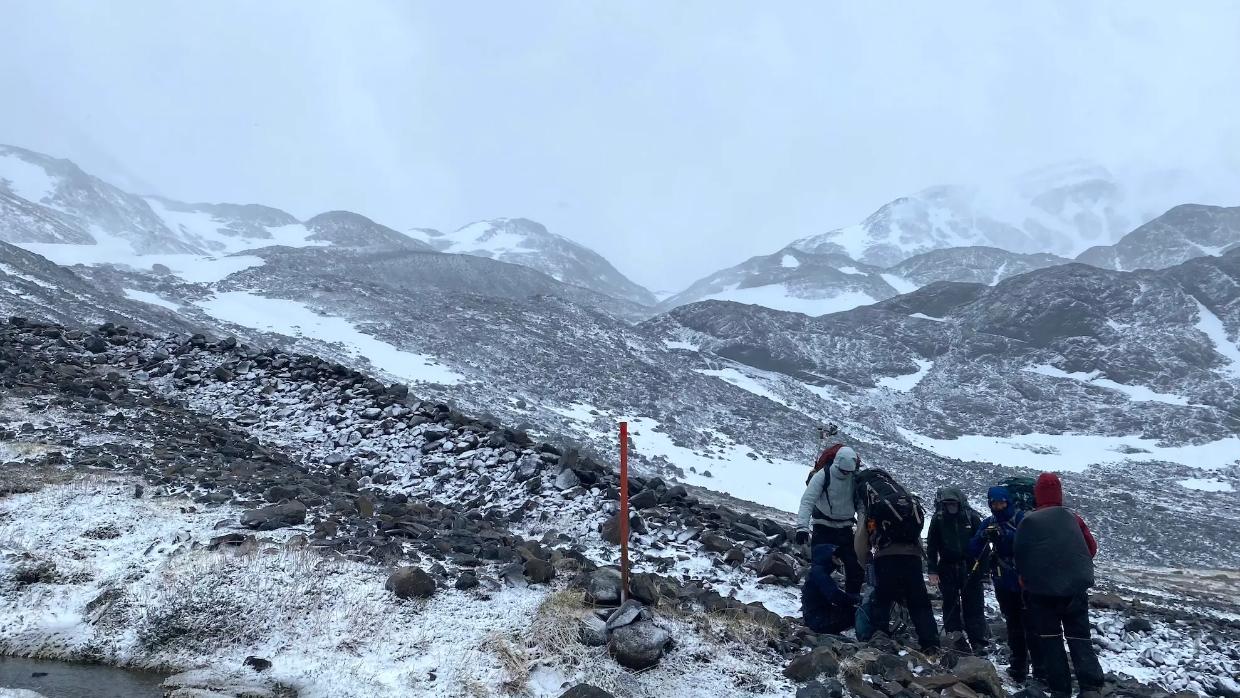
After reaching the tree line, the terrain became fully exposed. Wind pushed hikers laterally across the trail. Snow began accumulating on the ground and trail markers became increasingly difficult to identify.
David encountered hikers moving in small clusters. Some crouched behind rocks to avoid being blown off balance. Others pressed on toward the pass. People fell repeatedly as they struggled to move forward.
“We walked further up, the path becoming more treacherous with every step. Steep sections made it difficult to hold our footing. As I hiked, the waterproof tarp affixed to my backpack caught the wind like a sail and I thought I might fly off the mountain. When I reached a flatter, rocky area above, I remembered I had crampons in my bag. I crouched behind a rock to take them out, wrestling with my tarp. This is exactly how people die, I thought.”
Jewish law places pikuach nefesh, the preservation of human life, above almost all other considerations. Despite his own danger, David continued to do whatever he could to help other hikers. As a physician, he understood the severity of injuries in such conditions. Many hikers were disoriented and David tried to guide them along the path.
Near the upper portion of the pass, David reached another flat, rocky area and stopped to put on microspikes footwear to improve traction on the ice. After securing his shoes, he handed trekking poles to a man who was struggling to remain upright. Along the trail, David noticed a British hiker who had lost his gloves. Seeing the man’s hands turning numb, David removed socks from his pack and gave them to him to wear over his hands.
In desperation, the man asked David whether he was going to die. David encouraged him to keep moving and to focus on one step at a time.
David understood that fear could worsen hypothermia and impair judgment. Even without answers, encouragement was something he could offer. He believed that maintaining morale might help the man descend safely.
Eventually, hikers ahead began turning back. David followed and started his own descent. Further down the slope, he heard a scream carried by the wind. The man he had given the socks to had slipped and was sliding uncontrollably toward the rocks. David watched him disappear over the edge.
Hours later, the same man arrived at the lower camp alive. He had landed in a patch of soft snow and managed to walk back to the trail.
“Soaked and mildly hypothermic, my group continued quickly down to the previous night’s camp. Once there, we clambered into a hut, stripped off our wet gear, and boiled water. Slowly, the rest of the hikers trickled in. The hut usually serves as a campsite for those preparing to cross the pass. But on November 17, it became an emergency room.”
As darkness fell, it became clear that several people were missing. Weather conditions prevented immediate ranger access.
Hikers organized their own search efforts. Stretchers were fashioned from poles and ropes. Volunteers headed back uphill carrying sleeping bags, thermoses, and medical supplies.
David assisted with medical care inside the hut. “As an emergency room doctor in New York City, I’ve treated hypothermia and frostbite in an urban setting. The mainstay of treatment is simple: rewarming. But this was no city. While we waited for rescuers to return, another doctor and I took over the warmest room in the hut and gathered water bottles and stoves from the other hikers.”
When Christina, a hiker from Mexico, was brought down in hypothermic cardiac arrest, David began treatment immediately. Her wet clothing was removed, and she was wrapped in sleeping bags. Hot water bottles were placed along her body. Cardiopulmonary resuscitation continued for more than an hour. Christina was one of five people who lost their lives on the mountain that day.
In Man’s Search for Meaning, Viktor Frankl writes, “Between stimulus and response there is a space. In that space is our power to choose our response. In our response lies our growth and our freedom.”
That day on the John Gardner Pass, what remained within human control was courage, determination, and faith. David knew he had to do his part, guided by his Jewish values and medical training.
Judaism teaches that obligation does not depend on success, and that effort is required even when outcomes are uncertain.
David reflects, “When faced with the vastness of nature, many people feel small. That is not how I felt on November 17. Instead, I felt the largeness of the human spirit—our ability to rise to the occasion, help one another, and persevere in the teeth of disaster.”
When a Lethal Storm Turned a Mountain into an Emergency Room | Aish