Known as the Synagogue of the American Revolution, Congregation Mikveh Israel has stood at the heart of American Jewish history since its founding in 1740. As the oldest formal Jewish congregation in Philadelphia and the second oldest congregation in the United States, it has long served as a symbol of the enduring relationship between Jewish faith and American freedom.
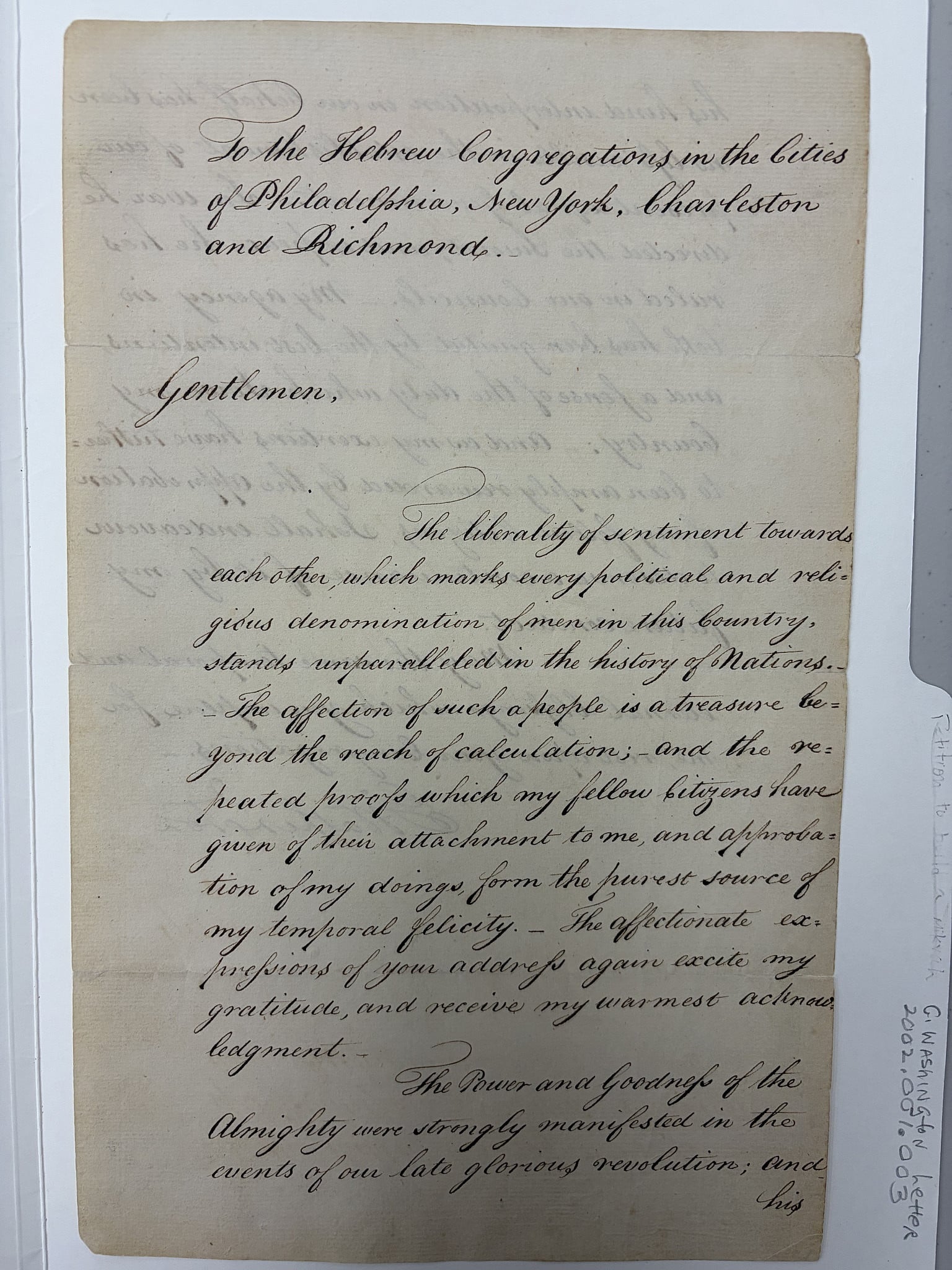
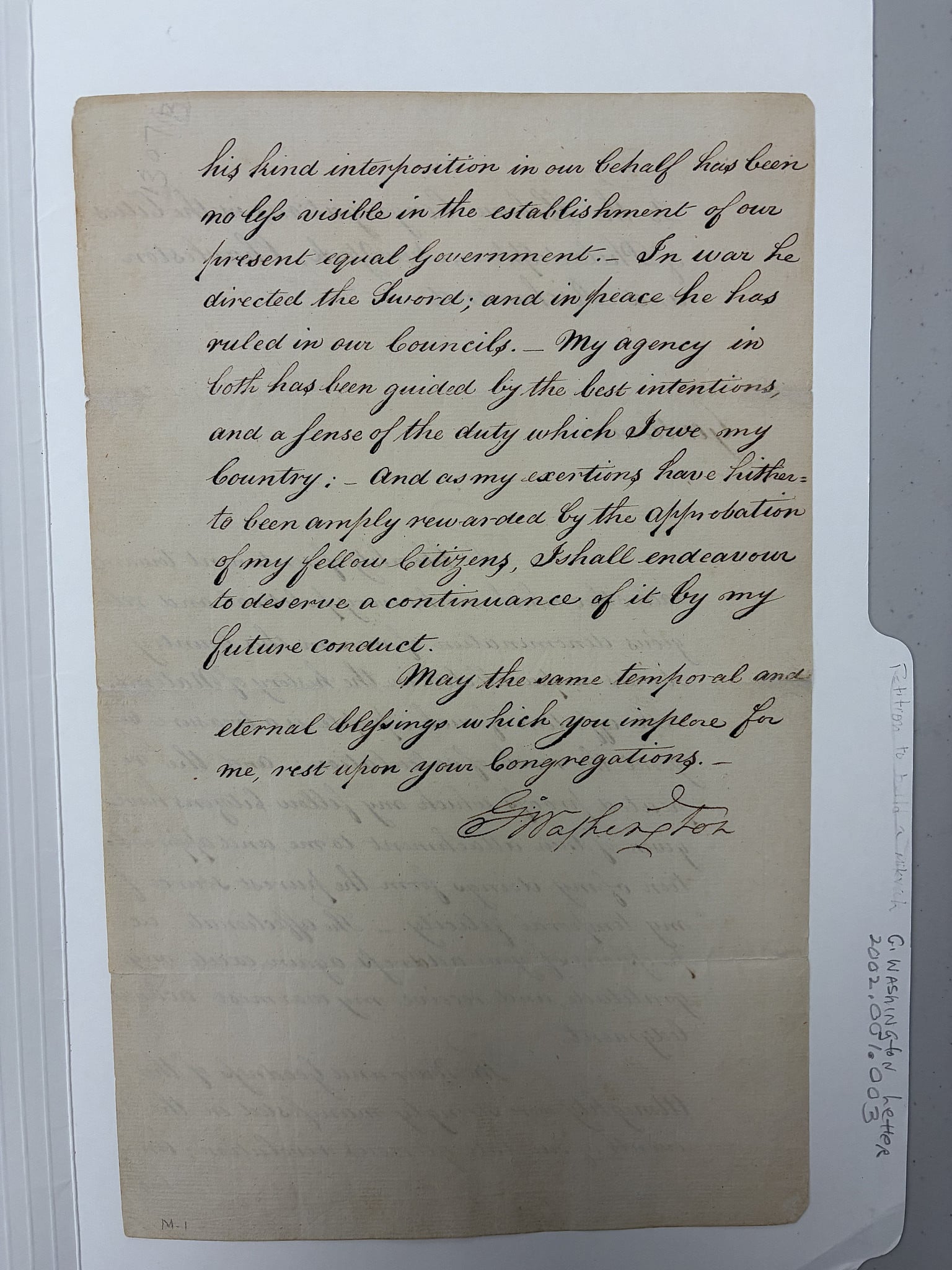
The synagogue’s rich history includes one of the most treasured documents in American Jewish history: a letter from President George Washington affirming the promise of religious liberty in the newly formed United States. Displayed among the congregation’s historic artifacts, the letter serves as a powerful reminder that the freedoms enjoyed by American Jews today were among the ideals upon which the nation was built.
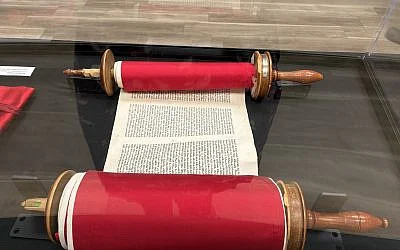
As America celebrates its 250th anniversary, Mikveh Israel has created a special exhibit highlighting artifacts that tell the story of Jewish life in America. Among the items selected for display is one of two Torah scrolls belonging to the family of Mark Fried, whose family history has become intertwined with both the congregation and the American Jewish experience.
For Mark Fried, the exhibit represents far more than a historical display. The Torah on view embodies generations of family history, immigration, faith, and continuity.
Rabbi Yosef Zarnighian who currently serves as the spiritual leader of Mikveh Israel, is also a chaplain in the United States Air Force. He joined the congregation in 2021, following the footsteps of Rabbi Albert Gabbai who served as Hazzan and Rabbi of the historic congregation for 35 years, after his immigration from Egypt. “I remember Mr. Samuel Isaac DeWolf as a big man with a booming voice and as big a smile. He would greet people with a saying I loved and repeated many times: ‘I am glad you met me.’ He passed away in the early 1990’s. The DeWolf family has been with Mikveh Israel for many generations. It is very inspiring to see that his grandson, Mark Fried continues to maintain the bond between his family and the synagogue. I think this bond is something to be proud of and to be emulated. It represents the continuity of the Jewish tradition that is passed from one generation to the next. This chain is the basis for Judaism’s survival. May we see more people who are taking those steps in every generation.”
Reflecting on the significance of a Torah scroll and its lasting legacy, Rabbi Zarnighian explains, “The Torah calls the mitzvah of writing a scroll ‘writing a song.’ When somebody donates a scroll, they are leaving a song that will last for generations to come, allowing for Jewish life, education, and knowledge of our heritage, which is the key to our people.”
His words resonate deeply with the story of the Fried family Torahs. Nearly two centuries after Gustav Cohn brought them to America, they continue to be read, studied, and cherished, ensuring that the song of Torah continues to inspire new generations.
The journey began with Fried’s great grandfather, Gustav Cohn, who was born in Frankfurt am Main, Germany. Before immigrating to North America, Cohn acquired two unique Torah scrolls that had been scribed in the Alsace-Lorraine region. Unlike traditional Torah scrolls, these were designed as travel Torahs. One was approximately one third traditional size and the other approximately two thirds traditional size, allowing them to accompany a traveler wherever Jewish life called.
Cohn eventually settled first in Canada and later in Philadelphia. As a traveling salesman, he spent much of his life journeying throughout the United States. Yet wherever he traveled, he remained committed to observing Shabbat and maintaining a connection to Torah. The scrolls accompanied him throughout those journeys, serving as both practical companions and spiritual anchors.
In his later years, Cohn moved in with his daughter, Ruth Cohn DeWolf, and her husband, Samuel I. DeWolf. The DeWolf family were longtime members of Mikveh Israel, and the Torahs eventually found a permanent home within the synagogue’s ark.
Yet Cohn left specific instructions. The Torahs were to remain family property, with Mikveh Israel serving as custodian for their safekeeping. He also required that the scrolls continue to be read regularly, at least once each year.
Decades later, stewardship of the Torahs passed through the family to Mark Fried and his sister, Sheryl Kline. Following the passing of their mother, Hedva DeWolf Fried, the responsibility largely fell to Mark, who became the family’s caretaker of the scrolls.
Since 2005, Fried has made an annual visit from his home in Bucks County to Mikveh Israel to inspect the Torahs and ensure they are being properly maintained. Each visit has become both a responsibility and a pilgrimage.
His connection to the Torahs stretches back to childhood. Growing up, holidays meant traveling from Margate, New Jersey, to Philadelphia to attend services with his grandparents at Mikveh Israel. One of his earliest memories involves watching the Torahs being prepared for reading. His cousin taught him how to carefully roll the silk binder that wrapped around the scrolls so it could later be replaced perfectly.
Years later, standing in the sanctuary as an adult and handling the same Torahs, Fried found himself flooded with memories. The scrolls became tangible links to parents, grandparents, and relatives who were no longer present. What began as an annual inspection evolved into a yearly encounter with family history.
One visit revealed an unexpected challenge. Congregation members could no longer identify which Torahs belonged to the family. Fortunately, Samuel DeWolf had left behind a solution. Known for labeling everything, he had placed a small label on one of the Atzei Chaim identifying it as the property of Samuel DeWolf. The discovery settled the matter, and an agreement was reached that the family Torahs would permanently occupy the far right and far left positions in the ark.
The Torahs have remained an active part of family life as well. When Fried’s son, Steven, celebrated his Bar Mitzvah, one of the scrolls was brought from Mikveh Israel to the family’s home synagogue in Bucks County. It was the first time the Torah had left Mikveh Israel since Samuel DeWolf had entrusted it to the congregation decades earlier.
Today, Fried and his wife, Alexis, remain members of Mikveh Israel. The congregation has even reserved Samuel DeWolf’s former seat for Fried whenever he attends services, providing yet another connection between past and present.
The selection of one of the family’s Torahs for the America 250 exhibit carries special significance. Fried’s family traces its American roots back generations, and family members have served in most major American conflict, including the Civil War. Yet the significance of these Torahs extends beyond one family.
Nearly two centuries after Gustav Cohn carried them across oceans and continents, the scrolls continue to be read, studied, and cherished. They remain living Torahs, actively used by the congregation and woven into the fabric of Jewish communal life.
Eli Gabai, Esq. who serves as the Mikveh Israel’s Parnas, a trustee of this Revolutionary Synagogue, believes that the letter sent directly to this congregation from the first President of the United States is a testament of all this congregation stands for. “Established in 1740 by Sephardic Jews post the expulsions from Spain and Portugal, and by Jews from all over Europe post the programs, the synagogue represents the resilience of Jews throughout the ages. Jews from our congregation fought alongside General George Washington to create a new reality. It is our duty to draw strength from the first waves of immigrants who came to this country and established this synagogue.”
In a synagogue that preserves George Washington’s promise of religious freedom, these Torahs tell another American story: the story of an immigrant family that carried its faith across the Atlantic, entrusted it to future generations, and helped ensure that the song of Torah would continue to be heard in America for centuries to come.