Who could have imagined that a group of Jewish tourists from the former Soviet Union—still learning the rhythm and soul of Shabbat—would one day celebrate it in a hotel in Tunis, joined by Belz Chassidic friends, Djerban Jews whose traditions reach back millennia, and local Tunisian Jews whose presence itself is an act of courage and devotion?
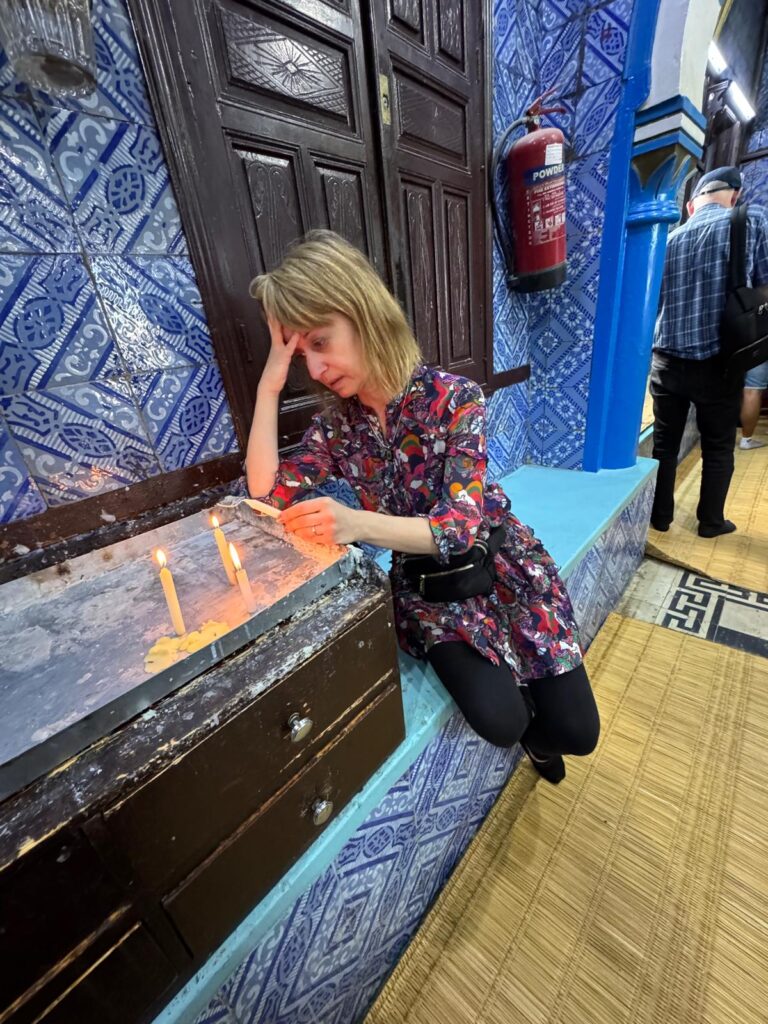
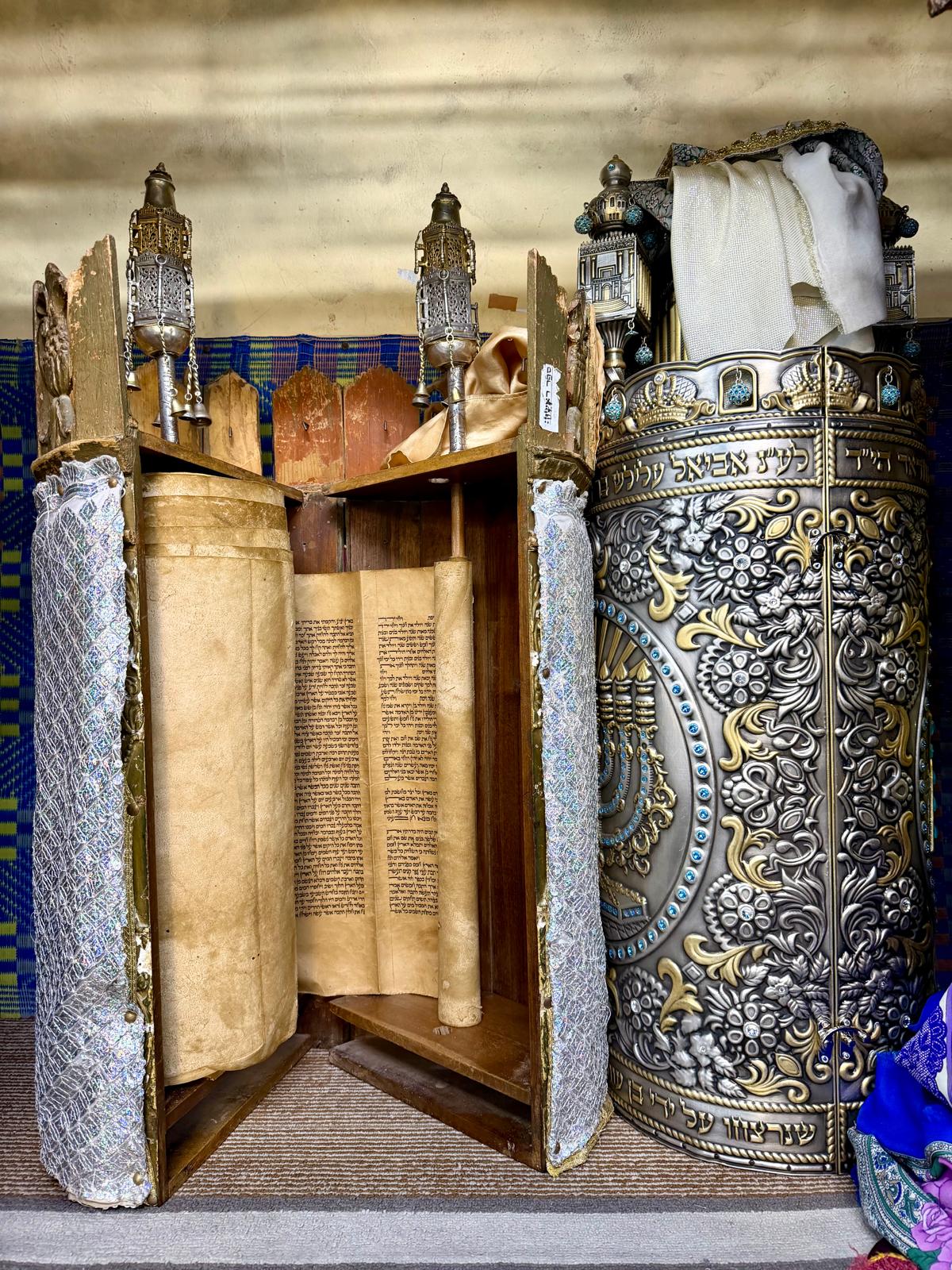
Earlier that week, we had walked through Djerba’s sunlit lanes, where Jewish life breathes effortlessly. The El Ghriba Synagogue stood radiant and timeless, a living testament to faith that refuses to fade. In Djerba, Shabbat is not explained—it simply exists, the pulse of the island itself.
One of the most moving moments on Djerba came when one of the Soviet-born women traveling with us received her Jewish name in the island’s synagogue—a ceremony so simple, yet deeply symbolic. In that moment, history came full circle: a woman whose ancestors had hidden their faith behind Soviet walls was now reclaiming it openly in one of the world’s oldest and most enduring Jewish communities. Tears mingled with smiles; it felt like a homecoming for us all.
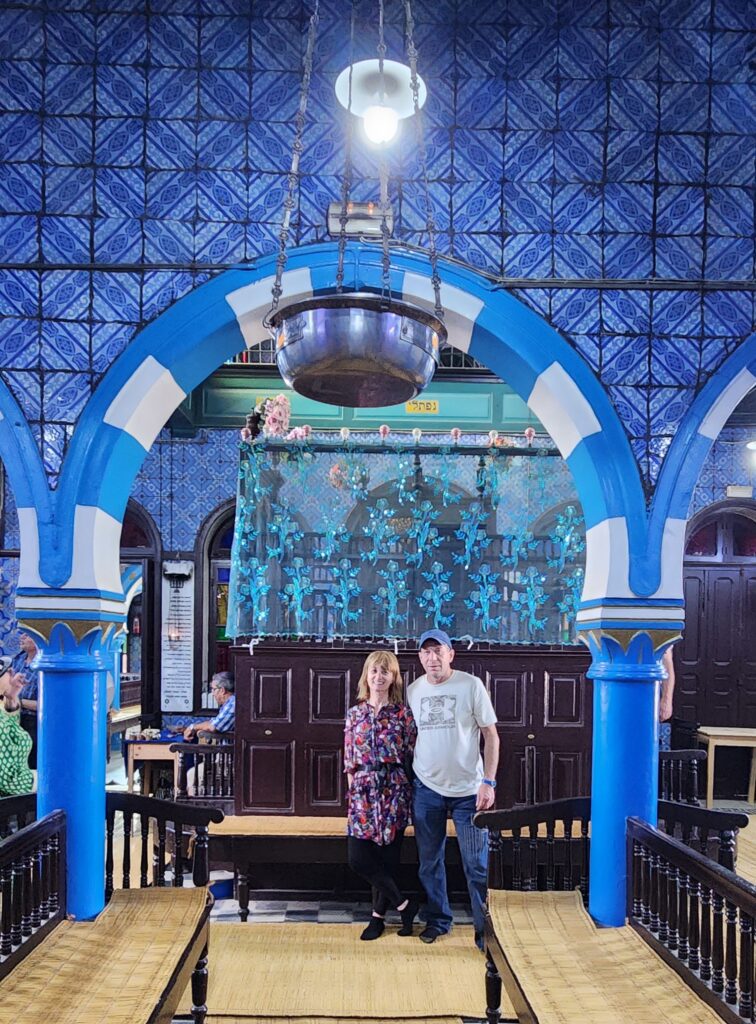
That same evening, we were invited to join the Djerban community for a celebration on the night before the brit milah of a newborn boy. We sat late into the night with the entire community, surrounded by warmth, song, and laughter. The feeling was indescribable—an overwhelming sense of belonging and love, as though we had always been part of them. The Djerban Jews, whose lineage stretches back to the earliest exiles from Jerusalem, welcomed us not as guests but as family, their joy flowing as naturally as the melodies that filled the courtyard.
The next morning, we joined them again for the brit milah, the covenant of the newborn boy entering the Jewish people. The prayers rose with ancient strength, and as the baby received his name, we felt that the chain of Jewish life—tested, scarred, but unbroken—was being renewed before our eyes. Afterwards, we shared the festive meal, tasting traditional Djerban delicacies alongside the families, laughing, embracing, celebrating together. The love in that room was as pure and genuine as one would feel among their own kin.
But our Shabbat would take place in Tunis, a city where Jewish life now survives in only a handful of families. We gathered in a hotel dining hall within walking distance of The Great Synagogue of Tunis, also known as Beit Mordechai—the main synagogue still active in the capital. The hotel had prepared a special dining room for our kosher group, a quiet space transformed into a sanctuary for the evening. The tables were beautifully set, the candles ready to be lit, and as sunset neared, a sense of holiness filled the room.
Local Jews arrived—just a few families—but their faces shone with excitement. They were ecstatic, even overwhelmed, to see such a gathering. “We don’t take an opportunity to make a minyan for granted,” one of them told me softly. “It’s a gift every time.”
As the candles were lit and the first soft glow spread through the room, the air grew still. We began to welcome Shabbat with Shalom Aleichem, voices blending into gentle harmony. A sense of serenity descended. Then came Eishet Chayil, the ancient hymn to a woman of valor—its melody flowing through the room like a blessing.
When we rose for Kiddush, the blessing over the wine, we became aware of the sacred divide between the ordinary and the holy. The murmured words of Borei Pri Hagafen seemed to open a doorway in time. Then came the washing of hands, the touch of cool water, and the Challah—freshly baked, its aroma filling the dining hall with warmth and memory. The scent was more than bread; it was the connection of generations, the continuity of Jewish life transcending continents and cultures.
Languages filled the air—Hebrew, English, Russian, French, Arabic, Yiddish—swirling around like music. Yet as the flames flickered, all words became one language: Shabbat.
The Belz Chassidim began to sing, their melodies steeped in longing and joy. The local Jews joined, clapping and smiling, their own tunes carrying the warmth of the Mediterranean. For us Soviet-born travelers, the songs were new, yet familiar in the way memory sometimes precedes understanding. We were still learning how to rest, how to let Shabbat enter the heart fully. But that night, surrounded by this unexpected family, it felt easy.
The food arrived—a feast of Tunisian and Djerban Shabbat flavors. A warm and wholesome Djerban couple had traveled all the way to Tunis to cater these unforgettable meals, bringing with them the heart and taste of their island. There was pkaila, rich and dark with spinach and olive oil, its aroma deep and comforting; couscous with lamb and chickpeas, delicately spiced; and fish simmered with coriander, garlic, and lemon, tender and full of life. The dishes told stories of generations who had kept faith alive even in isolation.
During the meal, people rose to share words of Torah, blessings, and reflections. Each voice added another thread to the tapestry of the night. We translated for one another—Hebrew to Russian, French to English, Yiddish to Arabic—affirming our shared understanding through nods and smiles. After each short teaching, a new song would begin, flowing from table to table, uniting us again in melody and spirit. The room glowed with laughter, song, and deep connection.
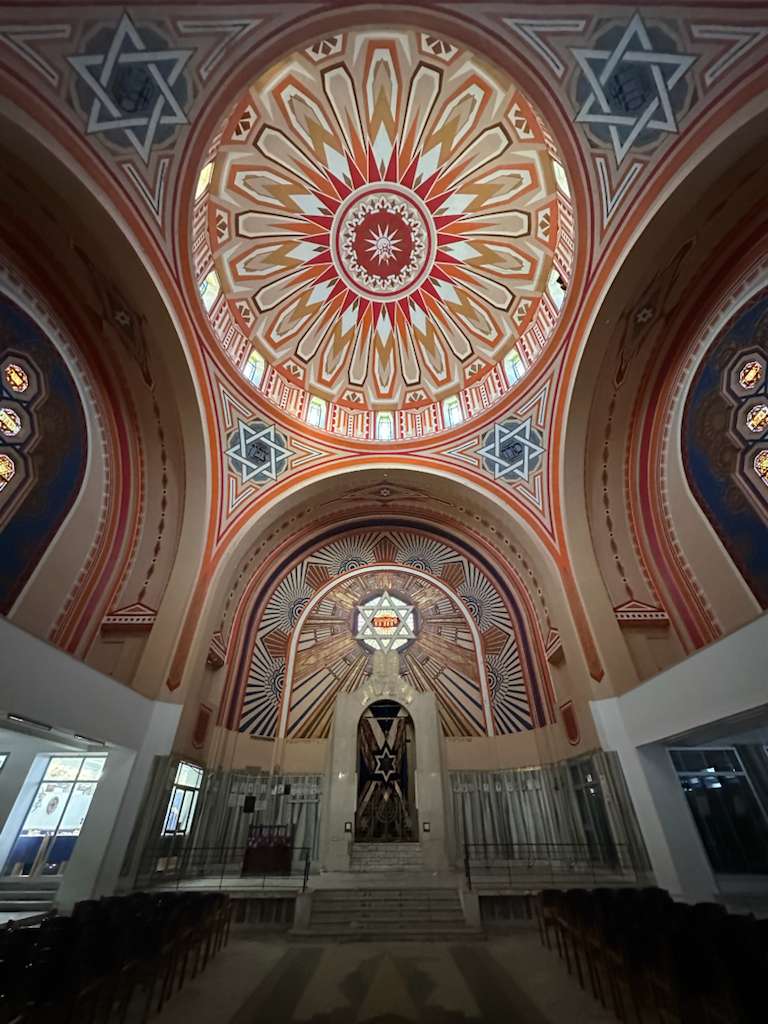
The next morning, we walked as one to The Great Synagogue of Tunis, its grand façade and arched blue windows rising gracefully above the quiet streets. Built in the early 20th century, the synagogue’s beauty speaks of a time when Tunis’s Jewish community numbered in the tens of thousands. Inside, the sanctuary shimmered with light filtering through stained glass, the walls echoing with the prayers of those who once filled every seat. Now, only a handful remain—but their devotion fills the space completely.
Our group joined them in song and prayer, our voices mingling with theirs. Every “Amen,” every word of ancient prayers seemed to weave together centuries of faith. It felt as though the souls of generations were present, rejoicing that Jewish life still breathes here.
That Shabbat was about switching off the screens and switching on the Light. It was about discovery—the rediscovery of what it means to connect to your inner light. Jews throughout millennia have exemplified to the world what it means to guard a flame. The Yiddish Belz Chassidim niggunim, as well as songs in familiar Russian, as well as Hebrew and Arabic, penetrated our neshamas—our souls.
And we, children of a Soviet reality, experienced with tears of joy that Shabbat is the sound of peace, unity, and silence. As the candles burned low that night, their light soft on every face, I understood something simple and eternal: Shabbat is the great translator of our people. It speaks every language, carries every melody, and unites every heart. No matter where we come from—Saratov, Jerusalem, Djerba, or Tunis—the light of Shabbat finds us, gathers us, and brings us home.