
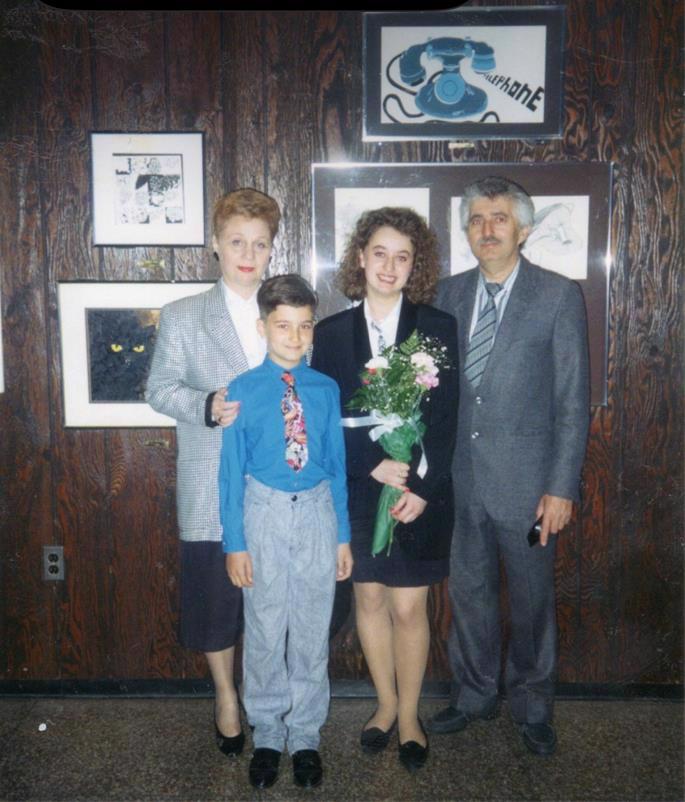
I was a young teen in 1990, newly arrived in the US from Russia, and found myself at my first ever Passover Seder with no idea what was going on.
My grandmother Zelda had been shopping for chicken at the local Philadelphia supermarket. She wanted to ask for a lower price, but did not speak English, so she tried Yiddish, the only language she knew besides Russian.
Imagine her surprise when her request was understood not by the cashier, but by a woman behind her in line! The woman introduced herself as Mrs. Batsheva Shemtov, who, together with her husband, Avraham, had been sent to Philadelphia by the Rebbe.
Recognizing that the poultry my grandmother had chosen was not kosher, Mrs. Shemtov showed her that the store also sold kosher chicken. My grandmother was bewildered; she had not heard about kosher in decades.
I don’t know what my grandmother decided to do about the chicken, but their encounter changed the course of my entire life.
Mrs. Shemtov understood that we had recently arrived from the Soviet Union and invited us all to the upcoming holiday of Passover. This would be our first encounter with Jewish tradition in America. I remember looking forward to having dinner with “real” American Jews.
As immigrants, we couldn’t afford lavish meals, and I was excited for an opportunity to enjoy great food. At the time, we had absolutely no idea that this would be anything other than a fancy dinner.
I remember being seated amongst other guests at a long table. The Shemtovs were full of excitement because they understood that it was our first Passover celebration.
The table was set with rather strange items: grated apples, a bone, celery, and eggs. I was surprised not to find bread and butter on the table because for me, that was a staple of any meal. We came in anticipation of a feast, and when I saw that the menu consisted of salt water and vegetables, I felt genuinely confused.
I carefully observed Rabbi Shemtov, who was following instructions written in a small book. The Seder was conducted in English and Hebrew, neither of which I understood. We followed his lead, and everyone drank wine from gorgeous crystal goblets. We were then instructed to eat items set in front of us in a particular order.
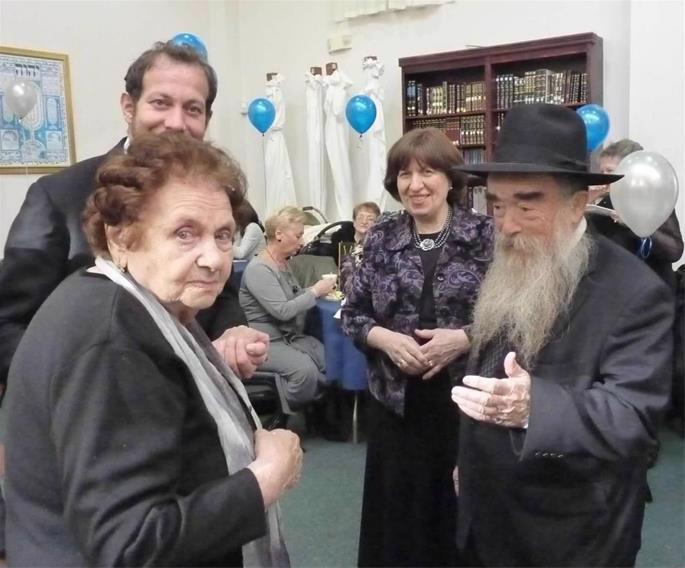
I couldn’t understand what the rabbi was saying, but I instinctively understood that there was meaning behind these traditions. Mrs. Shemtov saw our confusion and smiled at us kindly. She came over and spoke with my grandmother in Yiddish, and my grandmother tried to translate for us whatever Mrs. Shemtov explained about the holiday.
When I look back at that first Seder, two lessons stand out to me.
First, just because I don’t see the full picture doesn’t mean there isn’t an important explanation. That evening, I didn’t understand the meaning behind the items set out on the table, but that didn’t mean there was no order to it. Often, now, when I encounter situations that seem confusing or chaotic, I think of my first Seder. Ironically, that evening was all about order (seder is Hebrew for “order”) and my inability to understand it didn’t change or diminish the wisdom behind every ritual of the night.
And second, I realized that change takes time, patience, perseverance, and courage. If I had known at the outset how much work would be required from me to familiarize myself with my Jewish heritage, I would have been far too overwhelmed to embark on the journey. It took decades of consistent learning and investing in experiences to embrace my Jewish identity.
Each year, as I set my table with the Seder plate, I smile to myself and think about my first Passover. And while I rejoice in understanding the order of the night, I hope not to lose touch with my 13-year-old self, who was curious enough to bring me to this moment. (And my third lesson, perhaps, is to never stop asking questions. After all, isn’t that what this night is all about?)
Get in the Know!
At My First Seder, I Wondered Why There Was No Bread – Chabad.org